
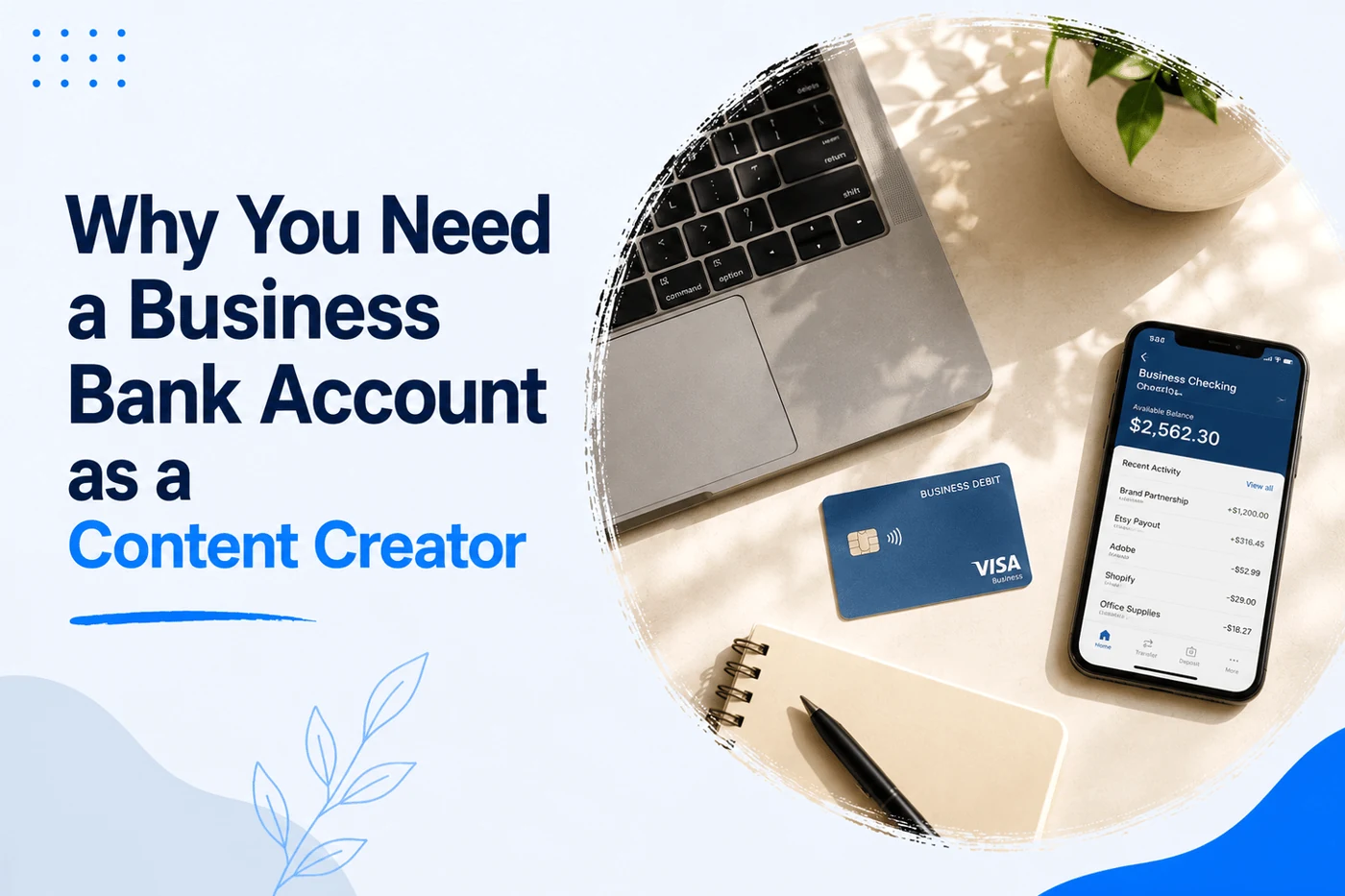
If you're making money from content and it's all landing in the same account you pay rent from, buy groceries with, and use for everything else in your life, you're making things harder than they need to be.
A dedicated business bank account is one of the simplest things you can do to get your finances organized as a creator. Here's why it matters.
What’s Covered
- It Gives You a Clear Picture of What You're Earning
- It Helps Tax Time Feel Dramatically Easier
- It Can Help During an Audit
- You Don't Need an LLC to Open One
- It Helps You Pay Yourself on Purpose
- The Bottom Line
1. It Gives You a Clear Picture of What You're Earning
When your content income is mixed in with your personal spending, it's almost impossible to know how your business is really doing. A business account helps fix that.
Everything coming in is business related. Everything going out is business related. You can look at the balance and the transaction history at any time and know exactly where your business stands without sorting through personal charges to get there.
Why this matters:
- It's hard to make good decisions about your business if you can't see it clearly. A business account offers an easier visibility into things like which brand deals are actually worth your time or how a platform is performing for you.
- It makes it easier to know what to set aside for taxes. When your content income is mixed with personal spending, it's hard to calculate an accurate percentage to save.
- It shows you your spending patterns. You can quickly see whether your equipment or software costs are creeping up over time.
2. It Helps Tax Time Feel Dramatically Easier
As a self-employed creator, you're responsible for reporting your income and tracking your deductible expenses. When business and personal transactions are tangled together in one account, tax season turns into a stressful, time-consuming mess of trying to figure out what was for content and what wasn't.
With a separate account, every transaction in it is business related by default. That means less guesswork, fewer missed deductions, and a much easier handoff if you work with a bookkeeper or tax preparer.
3. It Can Help During an Audit
If the IRS ever questions your deductions, having a dedicated business account shows clear, organized records that separate your business activity from your personal spending. Commingled finances make it harder to prove which expenses were legitimately for your business, and that's not a position you want to be in.
4. You Don't Need an LLC to Open One
You may have heard that you need a formal business structure to have a business bank account. You don't.
Many banks and credit unions offer accounts for sole proprietors. You can walk in with your ID and your Social Security number and open one. Some online banks make it even easier.
5. It Helps You Pay Yourself on Purpose
When all your money is in one place, it's tempting to just spend whatever's there. A business account creates a natural boundary.
Your content income goes in, your business expenses come out, and you transfer a set amount to your personal account as your pay. Everything else stays in the business account for taxes, reinvestment, and future expenses.
6. The Bottom Line
A business bank account isn't about complexity. It's about clarity. It takes 30 minutes to set up and it immediately changes how you see your money, your business, and your taxes.
If you're earning from content, this is one of the first things to get in place. Everything else gets easier from here.
This post is for general informational purposes only and is not intended as tax, legal, or financial advice. Every situation is different. Talk with a qualified professional about your specific circumstances.
← Back to Resources